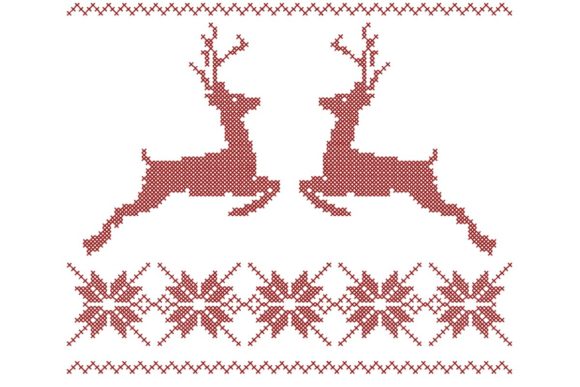
A Designer's Take on the Scandinavian Christmas Reindeer Embroidery Design
When I first previewed the Scandinavian Christmas Reindeer embroidery file, my immediate thought was "clean." It’s a design that carries a distinct mood: calm, elegant, and quietly festive. There’s a simplicity to the shape and layout that feels sophisticated, a hallmark of that Scandinavian aesthetic. It doesn’t scream with holiday clutter; instead, it whispers with a sense of crafted charm. This visual personality makes it more than just a seasonal graphic—it feels like a timeless decorative element, something you could almost use beyond December, or that becomes a cherished annual tradition on a family item.
The Natural Habitat for This Reindeer
In my mind, this design naturally belongs on items where that understated elegance translates into perceived value. Imagine a custom embroidered linen pillow cover for a holiday living room refresh, or a simple, beautiful addition to a cotton kitchen towel for a hostess gift. It would shine on a woolen blanket or a chunky knit sweatshirt, where the texture of the fabric complements the clean lines of the embroidery. As a designer preparing a boutique product line, I see it working wonderfully on tote bags, perhaps paired with a client’s name, making a personalized gift that feels both special and refined.
The detail level seems intentional—likely relying on well-defined satin stitches for outlines and smart fill stitches for the body. This suggests it won’t become a dense, stiff patch on lighter fabrics, which is a key consideration for apparel. I can picture it on a baby’s organic cotton sweater or a cozy cap without overwhelming the garment. For small business merchandise, like an Etsy seller’s holiday line, this design elevates a simple product. Stitched onto a high-quality apron or a tea towel, it turns a basic item into a desirable, handmade product that tells a story of considered craftsmanship.
Real Stitching: Where It Excels and Where to Be Mindful
In real-life embroidery situations, the Scandinavian Christmas Reindeer’s strength will be its stitching clarity. On a stable, medium-weight fabric like a canvas tote or a cotton sweatshirt, I anticipate it will look sharp and elegant, boosting customer trust in the quality of the finished product. For craft fair products or small shop merchandise, this clarity directly impacts brand consistency and professionalism—a clean stitch speaks volumes.
However, this elegance requires a thoughtful approach. On very textured fabrics, like a deep cable-knit, some of the finer details might get lost. On thin or stretchy fabric, you’d need to be exceptionally careful with stabilizer choice to prevent distortion. Dark fabric backgrounds are a classic challenge; the success there hinges entirely on thread color contrast. You’d want to test that thoroughly.
Working on curved surfaces, like a cap, demands attention. Designs with long, continuous lines can sometimes pucker if not hooped perfectly. And while the design doesn’t appear to have tiny lettering, any intricate corners or dense stitch areas, if present, would need a careful stitch-out on scrap fabric first. This isn’t a drawback; it’s just professional practice. For products destined for frequent washing, like baby clothes or kitchen linens, ensuring the stitch density is appropriate for the fabric will guarantee longevity and maintain that gorgeous look.
Thinking Like a Maker: Practical Notes Before You Hoop
Before committing this to a client’s project or your own holiday stock, run it through your standard pre-flight checks. Hoop it on some scrap of your intended fabric—maybe the actual linen for the pillow cover or the cotton for the tea towel. Check the thread palette. Does a classic red and white scheme feel right, or would a natural, muted palette of grays and creams better suit your brand and the Scandinavian vibe? Review the actual stitch density in the embroidery file; it should feel substantial without being board-like on your chosen material.
Always confirm the necessary hoop size. A design like this might be versatile, working from a modest 4x4 hoop to something larger for a statement piece on a blanket. Inspect the small details in your test run. Also, it’s incredibly helpful to test the design in black and white mockups for your digital product previews or printable mockups. This helps visualize it purely as shape and contrast, stripping away color bias.
Compare how it looks on both light and dark fabric backgrounds in your software preview. And crucially, use the proper stabilizer. This step alone can make or break the visual appeal of the final embroidered patch or apparel decoration.
The Bigger Picture: From Personal Stitch to Commercial Product
This machine embroidery design has a clear giftability and recognition factor. As a holiday gift, a sweatshirt or tote adorned with this reindeer feels personal and crafted, not generic. For buyer engagement in an Etsy listing or small shop product page, high-quality photos of a cleanly stitched finished product will be key.
A final, essential note: check the provided license terms before selling finished items or commercial embroidery projects. Confirm whether the digital embroidery file is intended for personal use, commercial use, or both. This is a fundamental step for any creative entrepreneur or digital product seller incorporating design assets into their business.
The Scandinavian Christmas Reindeer, from a designer’s perspective, is a versatile and aesthetically strong foundation. Its value lies in its ability to elevate a simple project into something that feels intentional and beautifully handmade. With practical testing and mindful application, it can become a reliable asset for holiday projects, personalized gifts, and a thoughtful addition to any crafter’s or small business’s seasonal offerings.