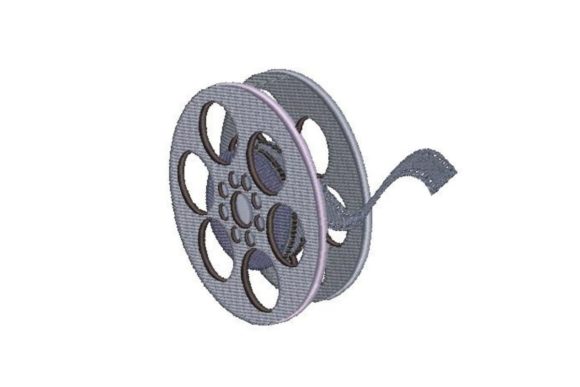
Film Reel Embroidery: A Design Review for Business Branding
As a professional embroidery designer who works with small businesses daily, I approach every machine embroidery design with a specific lens: how will this perform as a tangible asset for brand-building? Today, I’m reviewing the Film Reel embroidery design. This isn’t just about decoration; it’s about evaluating its potential as a core element for merchandise, patches, uniforms, and branded products.
First Impression: Classic, Professional, and Passion-Driven
The Film Reel design, from its title and description, clearly taps into a classic, cinematic aesthetic. My immediate impression is that it leans towards a professional, clean, and universally recognizable visual. It feels neither overly rustic nor overly playful, but sits in a confident middle ground that suggests quality and a shared passion. For a business, this is a significant starting point. A design that feels professional and classic can enhance customer trust and perceived value, making it a strong candidate for branded merchandise that needs to convey authenticity and expertise.
Real Business Use: Where the Film Reel Design Excels
Let’s translate that visual personality into practical applications. For a small café with a film-themed name, a boutique selling curated goods, a creative studio, or any local business wanting to connect with a community of enthusiasts, the Film Reel design offers versatile branding opportunities.
Embroidered Patches for Product & Uniforms
The Film Reel design is an excellent candidate for an embroidered patch. Patches are incredibly versatile for small business merch. They can be applied to staff aprons in a bakery, sewn onto the sleeves of uniforms in a pet brand’s grooming shirts, or used as a product label accent on handmade tote bags from an Etsy seller. As a patch, this design would serve as a consistent brand mark across different items.
Apparel and Accessory Branding
For cap embroidery, the central, iconic shape of a film reel should translate well to the curved front of a cap, provided the detail level is suitable for smaller sizing. As a chest logo accent on work shirts or a subtle sleeve detail, it adds professionalism without being overwhelming. For tote bags and aprons, this design acts as a premium mark that elevates a simple utilitarian item into branded merchandise. It’s perfect for customer gifts, event merch, or as a sellable product itself for a craft business.
Strategic Considerations for Optimal Results
While the Film Reel design has broad appeal, successful commercial embroidery requires careful planning. Here are key points a business must consider before production.
Navigating Scale and Detail
A crucial test for any digital embroidery file is how it performs at small sizes. For a cap front or a small patch, intricate details can get lost. I strongly advise testing this design at the intended patch size first. Check the spacing of any internal elements and the clarity of outlines. High stitch density in a small area can lead to a stiff, bulky patch, which is less ideal for flexible fabrics or curved surfaces like caps.
Fabric, Color, and Durability
Thread color contrast is paramount. If your staff uniforms are dark, the design might need to be embroidered in a light, contrasting thread palette to remain visible and crisp. Always test on real fabric scraps that match your final product—a textured fabric like a canvas tote bag behaves differently than a smooth polo shirt. Using the proper stabilizer is non-negotiable for a clean finished product. Furthermore, for items like aprons or work shirts that need frequent washing, a robust, dense design holds up better, but again, test for puckering or distortion.
Integrating into Your Brand Identity
The Film Reel design should not exist in isolation. Before committing, create a printable mockup to see how it looks alongside your other design assets, like your logo or typography. Does it complement your brand’s visual consistency? Does it enhance your handmade presentation or product value? For a florist using it on aprons or a studio using it on gift merchandise, it should feel like a cohesive part of your story, reinforcing recognition and buyer engagement.
Essential Designer Notes Before Production
Based on my experience, here is a practical checklist for any small business or embroidery shop preparing to use the Film Reel design for commercial embroidery projects.
- Start Simple: Test the embroidery file in a single thread color, like black or white, first. This reveals the core structure and stitch flow without color complexity.
- Verify Scale: Hoop it at the exact size you intend to use for your patches or apparel. Confirm it reads clearly and doesn’t become a muddy blob.
- Client Approval: Always generate a mockup—a simple digital image on a product photo—for client approval before stitching the final product.
- Licensing Assurance: The description mentions it comes with multiple embroidery file formats. Crucially, confirm the commercial licensing terms before using it for business merch. Ensure your use is covered.
- Context Check: Compare the stitched sample beside your existing branded materials. Does it feel like it belongs?
Final Assessment for Business Value
The Film Reel machine embroidery design presents a strong, classic visual that can anchor a small business’s merchandise strategy. Its success hinges not on its theme alone, but on its execution as a functional brand asset. For apparel decorators and merch creators, it’s a design that, when applied with technical care—mindful of size, fabric, and integration—can elevate custom apparel, create meaningful patches, and add a layer of professional, passion-driven branding to aprons, caps, and tote bags. It reminds us that in commercial embroidery, the design file is just the beginning; its real value is forged in the thoughtful application to products that represent your brand to the world.